Why We Don’t Trust Driverless Cars — Even When We Should

This article was originally published in Harvard Business Review and co-authored with Kartik Hosanagar, a professor at the Wharton School.

On May 7th, 2016, Joshua Brown, a 40-year-old entrepreneur and technology enthusiast from Canton, Ohio, was sitting behind the wheel of his Tesla Model S sedan when a tractor-trailer turned across his path. The Tesla, which was engaged in its self-driving Autopilot mode, failed to register the white tractor-trailer against the bright, sunny Florida sky. Mr. Brown also didn’t engage the brakes in time. His Tesla crashed into the truck at 74 miles per hour, killing him almost instantly.

More than 30,000 people are killed each year in car crashes in the United States. In 90% of crashes, human error is to blame. And so most experts agree that self-driving car technology will reduce the number of crashes and fatalities. Self-driving cars, Adrienne LaFrance writes in The Atlantic, could save up to 1.5 million lives just in the United States and close to 50 million lives globally in the next 50 years. Yet in a March 2016 poll by the American Automobile Association, 75% of respondents said they are not ready to embrace self-driving cars.

Driving a car is one of the most personal – and dangerous – things we do. It’s understandable that people are skeptical of handing over their keys to a faceless algorithm and sitting back for the ride. When you think of the word “algorithm,” you might picture a computer crunching numbers according to a formula or following a pre-programmed sequence of steps. But algorithms have come a long way in the last decade: they can take in data, learn, and generate more sophisticated versions of themselves. They can even drive a car.

We rely upon algorithms for many of our decisions and actions, from low-risk activities such as deciding what to watch on Netflix or buy on Amazon to high-stakes decisions such as how we should invest our savings. We are even OK with autopilot features controlling our airplanes. This current skepticism for self-driving cars thus raises a question: Why do we trust algorithms in some cases, but not in others?

Our Selective Trust in Algorithms

Humans aren’t always algorithmically averse.  Research conducted by one of us (Kartik) on automated product recommendation algorithms, such as Amazon’s “People Who Bought X also bought Y,” found that people like algorithmic recommendations and often follow their advice. For example, in one recent study conducted with professor Dokyun Lee at Carnegie Mellon University, we randomly assigned consumers at a top-five online retailer in Canada to either a treated group that received algorithmic recommendations or a control group that received no recommendations. We found that the algorithmic recommendations drove a 25% increase in the number of products viewed by consumers and a 35% increase in products purchased. In additional research, we found that the influence of recommendation algorithms on choices is greater for hedonic products – characterized by pleasure-oriented consumption (e.g., movies, perfume, art pieces) – than for utilitarian products wherein consumption is motivated by functional need (e.g., paper clips, dishwashing agents and vacuum cleaners).

In another study, we found that even randomly generated product recommendations were able to drive a modest increase in purchases when the recommendations were labeled as personalized – perhaps a placebo effect. A post-experiment survey revealed that consumer trust with the random product recommender was no lower than with a sophisticated and personalized recommendation engine. Beyond product recommendations, the rapid growth of “robo-advisors” like Wealthfront and Betterment show that people are willing to trust algorithms for important investment decisions that were previously done by human experts.

Yet, there are important ways in which product recommendations, investment management and driverless cars are different. These differences relate to the level of subjectivity in judgment, types of users targeted by these systems and the level of user control in decision-making. Jennifer Logg, a researcher at the University of California at Berkeley, designed four studies to figure out why we sometimes mistrust algorithms despite our growing dependence on them. In the first study, participants made two estimates about the weight of a person in a photograph. The first estimate was based on participants’ own judgment. For the second estimate, participants were given advice: some were given an estimate from other people and others saw an estimate generated by an algorithm. Logg was able to measure the extent to which participants trusted an algorithm more than other people based on how the participants’ estimates changed between the first and second guesses.

For estimates and predictions that have a correct and verifiable answer – not only a person’s weight, but also questions like which movie would top the box office or the probability of a certain world political event – Logg found that people are more likely to trust estimates from algorithms than from other people. In another study from the same series – where participants identified what questions they would entrust to an algorithm vs. human advisors – Logg demonstrated that people trust human advisors over algorithms for more subjective decisions. That people trust algorithms for more objective decisions, and trust them less for subjective ones, is not surprising. However, Logg found that trust in algorithms depends not just on the matter at hand, but also on individual characteristics: people with higher numerical literacy trusted the algorithm estimate more than people with lower numerical literacy.

While it is hard to generalize Logg’s findings on prediction tasks to driverless cars, they do point to an interesting theory: Could it be that people are hesitant about self-driving cars because they view driving as a more subjective, personal experience? And rather than advertising the self-driving capabilities to the broader market, is it more prudent to target people who have greater comfort with math and science – and by extension, technology?

Of course, most technological advances are first embraced by the scientific and technological elite. These early adopters work out the kinks and make the technology understandable to the general public. But the magnitude of technological advancement that self-driving cars represent – a total replacement of human control with algorithmic machine control – might be uniquely vulnerable to setbacks like the one facing Tesla at the moment.

Consider the findings described by our colleagues at the Wharton School of the University of Pennsylvania: Berkeley Dietvorst, Joseph Simmons, and Cade Massey. Their research showed that people lose confidence in algorithms much more than in human forecasters when they observe the two make the same mistake. Furthermore, people were less likely to choose an algorithm over a human forecaster even if the algorithm outperformed the human on the whole. In short, we are not very forgiving of mistakes made by algorithms even if we make the same mistakes more often. The implication is chilling for self-driving car manufacturers and proponents: People might rapidly lose trust in the technology if there are enough incidents like the one involving the Tesla, even when the technology is proven to be safer in the aggregate. Early fatalities could turn the general public against self-driving cars very quickly. Manufacturers have to think harder about when and how to introduce driverless features.

Dietvorst, Simmons and Massey did find some good news for algorithms that make mistakes: In another study the authors report that participants were more accepting of algorithmic errors and more likely to choose to use an algorithm over a human when they could modify its forecasts. In the study, participants were asked to predict students’ standardized test scores based on nine data points. Then they could choose how much to rely on an imperfect algorithm. The participants who could modify the algorithm were much more likely to rely on the algorithm than participants who could not modify the algorithm. Even more encouragingly, the authors found that people didn’t care how many modifications they could make: they just wanted to have some control over the algorithm. The implication for self-driving cars is hopeful: If people are given the chance to control some aspects of the driving experience and decision making – such as the speed or route – then people might be more inclined to let cars do the driving themselves. But removing personal decision-making from the process entirely, as Google and many automakers have decided to do, might be met with skepticism among customers.

As Artificial Intelligence (AI) advances and deep learning – a branch of machine learning that aims to recreate the actual processes of neurons in the brain – matures, algorithms will run a greater share of our lives. That said, skepticism about Tesla’s self-driving vehicle only shows that good technology alone does not ensure success. AI and smart algorithms need to be introduced in ways that win trust and confidence of their human users.
Making Value a Priority

This paper was originally published in a scientific journal called the Annals of the New York Academy of Sciences and co-authored with John Kimberly, a professor at the Wharton School. Just the abstract is below, but you can find the full article here.

The world of health care is changing dramatically, as reflected in the number, magnitude, and scope of innovative new approaches—to how illness is treated and how better health is promoted—that are being implemented around the globe. The changes triggered by these initiatives affect both how care is organized, managed, and paid for and the kinds of approaches that are being developed to keep people healthy. Underlying these changes is a more fundamental paradigm shift, a shift in the priority given to “value” in the formulation of policy and management practice. This brief essay highlights five trends that are central in this shift: increasing emphasis on health promotion, movement toward value-based payment, advances in digital/mobile technology, exploitation of big data, and changes in support for biomedical research. Each of these has its own value controversies, and the individual impact of each is impossible to predict. Collectively, however, their impact is likely to be significant. [Full Article]

Managing Population Health and Managing to Stay in Business

This post was originally published for the Health Policy$ense blog of the Leonard Davis Institute of Health Economics.

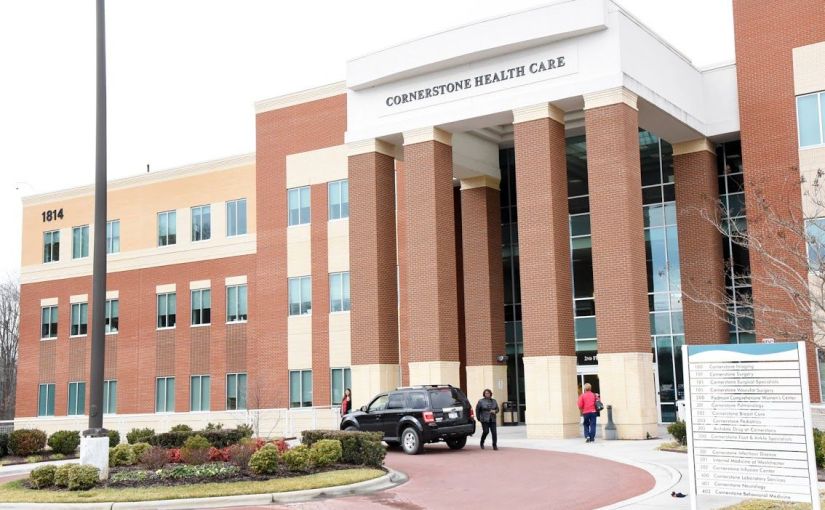
Dr. Grace Terrell, President and CEO of Cornerstone Health Care, recently visited LDI and shared her experience of directing a physician-led health system through health care reform. Terrell, a primary care physician and a good Southern storyteller, told us about ‘Julia’, her patient of more than 20 years:

Julia had just gotten a huge medical bill [from] this place in the local community that could cure all sorts of knee pain and back pain. What she got was a $1,500 bill that her exchange product paid about 60 percent of, for care she absolutely did not need. It was unnecessary, expensive, inappropriate care at the wrong place, for the wrong price, at the wrong time. Unfortunately, that’s the way a lot of health care is still in this country. The story of our organization is confronting that and dealing with that and trying to innovate around that in the middle of being in just a regular old medical practice.

Cornerstone began in 1995 as a multidisciplinary group of 42 physicians in 15 practices in central North Carolina. It focused on early adoption of new technology and practice innovations, including: electronic medical records in 2005; weekend hours in consolidated, multi-specialty facilities in 2007; and certification of its primary care practices as so-called “medical homes” in 2008. In 2015, Cornerstone had a high national rank among Medicare Shared Savings Program participants, and its spinoff CHESS has been selected to become a Next Generation ACO.  More than 300 physicians are now part of the group.

Gauging from her storytelling, Terrell is clearly passionate about designing new models of care to deliver greater value in health care. Some examples of Cornerstone’s initiatives:

  • Cornerstone invested in population health analytics software and reached out to patients who had lost touch with their doctor. According to Terrell, Cornerstone had “better results with blood pressure, cholesterol and blood sugar from just this one maneuver than we had from hiring our new endocrinologist at $300,000 a year!”
  • In a “look at the whole picture approach”, Cornerstone set up two clinics with an internist, a nurse practitioner, a care navigator, behavioral medicine specialist and a pharmacist.
  • Cornerstone established a heart function clinic with embedded behavioral services since “the number one indicator for heart failure readmission to the hospital is actually depression.”
  • In its oncology clinic, Cornerstone embedded a general internist who could preserve continuity of care for patients’ medical needs beyond cancer.
  • For Medicare and Medicaid dual eligibles, Cornerstone created a concierge practice with full assessment of psychiatric needs.
  • To support the neediest and sickest patients, Cornerstone built an extensivist practice with a focus on medication management.

Unstable Finances
However, the outcomes they achieved did not translate into a stable financial base. Terrell observes: “It has been an up-and-down, yin-yang experience for our organization where the finances have never been there as we had thought they were going to be…The payers have never been as quick to move as we thought they were going to move.”

For much of the past year, Cornerstone has been “trying to keep the place open and pay the lights and doing things like pay chemo bills and things like that…It required a significant amount of working with the physicians who said ‘we thought this was going to work by now.’” In early 2016, Cornerstone was acquired as a wholly-owned subsidiary of Wake Forest Baptist Medical Center, an academic medical center based in Winston-Salem, NC. It will continue to operate as a separate business unit.

Looking ahead, Terrell ties up her story about ‘Julia’: “I don’t know where the rest of things are going, but I do know it’s the right thing to do. We’ve got an incredible problem in this country: a sixth of our economy is giving health care to one another. We don’t invest in anything else much, and we don’t give good care – or we give care like we did to Julia. The $1,500 got spent on something of absolutely no value, when she’s having all sorts of other medical issues that are not being addressed because we haven’t had the infrastructure to do it.”

Health Equity Symposium Features Fiery Carmona

This post was originally published for the Health Policy$ense blog of the Leonard Davis Institute of Health Economics.

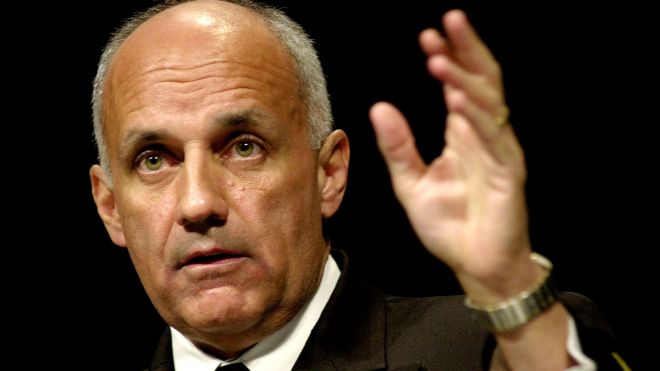
Penn’s Second Annual Martin Luther King, Jr. Health Equity Symposium drew attention to the importance of inclusion and diversity in medical education and research on both a national and local level.  A panel of Penn faculty, including several LDI Senior Fellows, directly confronted the barriers to inclusion at Penn, and Dr. Richard Carmona, 17th Surgeon General of the United States, shared a detailed account of his rise from an impoverished Hispanic family in Harlem, New York to the prestigious post as the “doctor for the nation” in the Bush administration.

Dr. Eve J. Higginbotham, Vice Dean for Inclusion and Diversity, introduced the panel, and Dr. Jerry Johnson, Chief of Geriatric Medicine and Director of the Center of Excellence for Diversity in Health Education and Research moderated the group. Each panelist gave her perspective on the importance of diversity, barriers to progress, and possible solutions.

  • Dr. Tiffani J. Johnson from the Children’s Hospital of Philadelphia explained how the “leaky pipeline” prevents underrepresented minority students from advancing through the ranks of medical school to residency to junior and tenured faculty. Part of the issue, she said, is our implicit bias against racial minorities that lies “below the surface, but may influence behavior.” While racial bias is well-documented in the business and academic worlds, Johnson shared evidence that pro-white and anti-black racial bias exists among physicians for both adult and pediatric patients. She suggested that implicit racial bias could be mitigated through “positive black priming” and increasing interactions between people of different races.
  • Dr. Jaya Aysola from the Perelman School of Medicine discussed the factors contributing to a culture of inclusion (and lack of inclusion) at Penn Medicine. Her research has found significant variation in experience according to gender, ethnicity, and sexual orientation. In particular, women, LGBTQ, black, Hispanic, and multi-ethnic individuals perceive a lower “cultural competence” at Penn. Aysola called for identifying and improving factors within Penn’s organizational system and culture.
  • Dr. C. Neill Epperson from the Penn Center for Research on Sex and Gender in Health challenged the audience to think about diversity and inclusion among medical and health services researchers. She shared data indicating that low institutional support, low values alignment, low inclusion and low self-efficacy made people more likely to leave their institution – and that underrepresented minorities experience these issues at high rates. To address the barriers faced by younger researchers, she pointed to solutions such as on-site daycare and more progressive parental leave policies.
  • Dr. Shreya Kangovi, founding executive director of thePenn Center for Community Health Workers explained how the community health worker model can improve access and quality of care, improve patient activation and mental health, and reduce readmissions. The Penn CHW center delivers care to 1,500 patients per year and has advised more than 500 organizations who also want to develop a program. Kangovi related a story that captured the value of using CHWs as preceptors for medical students in low-resource environments: “30-year old, no family, uninsured and taking street Xanax. You automatically think: difficult patient. We walked in and [CHW] was like oh my god, your hair is so cute! The patient got this big smile on her face and started talking to us. My whole impression of her just changed.”

In his closing remarks, Dr. Richard H. Carmona talked about his journey from a poor Hispanic family in Harlem, New York to the U.S. Surgeon General position in the Bush administration from 2002-2006. His tenure is notable for hislandmark report on the harms of secondhand smoke and his subsequent criticism of the Bush administration for suppressing his public communications related to stem cell research, contraception and climate change.

Dr. Carmona delivered a passionate call for greater efforts to reduce inequities in health. After recounting “sobering” statistics about health inequities between blacks and whites—including how black women are 2.5 times more likely to die during pregnancy—he discussed how racial inequities pervaded every aspect of his agenda as Surgeon General. During his term, he grew to believe that the issue was one that we could neither ignore nor escape from.

“Martin Luther King recognized these injustices and inequities,” said Carmona. “He understood the social determinants of health — how all of these things lead to bad outcomes. When people don’t have access, when they don’t understand, what they can’t make informed decisions on what they need to pursue optimal health and wellness.” Carmona also called out Congress for delaying progress.

 Congress remains divided and fights over this because, ‘Well, we don’t want another welfare program.’ Well, neither do I. I want to empower people. […] If we don’t do something about these disparities, injustices and so on, the disease and economic burden we will leave our children is unsustainable.

Whether you have a heart, or whether you’re just a smart businessman, we have compelling reasons to start interceding aggressively to eradicate these disparities.

The audience responded with a standing ovation at the end of his talk. You can hear a clip here.

The Third Annual Martin Luther King, Jr. Health Equity Symposium will take place on Monday, January 25, 2017 and will feature a keynote address from Dr. Antonia Novello, the fourteenth Surgeon General of the United States, who served from 1990-1993.

Diversity in the Health Professions: a ‘Leaky Pipeline’

This post was originally published for the Health Policy$ense blog of the Leonard Davis Institute of Health Economics.

Despite decades of calls for increased representation of minorities in the health professions workforce, we are very far away from a workforce that reflects this nation’s diversity. Underrepresented minorities make up 31% of the general population, but just 15% of medical school students and 13% of dental students. A new study helps us understand the barriers minority college students face in pursuing medical and dental careers.

In Academic Medicine, Brandi Freeman and colleagues, including LDI Senior Fellows Judy Shea and David Grande, report on focus groups they conducted with undergraduates from minority backgrounds that are underrepresented in medicine, including Blacks, Latinos, and Native Americans. The one-hour focus groups, involving 82 diverse students across 11 colleges, highlighted several challenges: inadequate institutional resources for academic success and clinical opportunities; strained personal resources such as lack of financial resources or familial pressure; inadequate guidance and mentoring to assist with key career decisions; and societal barriers such as work-life balance concerns or job uncertainty.

The quotes from the focus groups illustrate the challenges, insecurities and uncertainties that these students face:

…somebody else who never worked—had to work for anything and their parents paid for all their college, it’s their GPA is obviously going to be higher because all they had to focus on was school.

It’s kind of a disadvantage almost if you don’t have family that—or someone that will let you come into their workplace and follow them around. […] For people who don’t have that as an option, it makes us look bad.

I feel kind of lost. I know I want to be there, but I just don’t know how to get there.

What happens if you never get matched, I guess? Because that’s a possibility and you don’t go through residency, so you’re stuck with an MD who can’t practice medicine.

The focus groups were conducted as part of the Tour for Diversity in Medicine, an effort from underrepresented minority physicians and dentists to encourage students of diverse backgrounds to pursue careers in the health professions. The focus group approach to understanding root causes of the “leaky pipeline” is important, the authors say, since past studies have relied on quantitative data such as academic achievement, focused on a single institution, or captured perspectives from minority students who have already become health professionals. This new study is more qualitative, involves multiple institutions across the nation, and captures the undergraduate perspective.

The authors suggest that external programs, such as the Summer Medical Education Program(SMDEP), can strengthen support for students at resource-limited institutions. To address strained personal resources and familial barriers, the authors recommend educating families at the high school level to familiarize them with the medical training process at an earlier stage. At a higher level, the authors suggest that policy changes, such as regulation of medical resident work hours, can change perceptions of work-life balance.

Increasing the diversity of the workforce is important because health professionals from underrepresented backgrounds disproportionately serve minority and other medically underserved populations. In addition, minority patients tend to receive better care from practitioners of their own race or ethnicity, particularly in primary care and mental health settings. As part of a series on how the Affordable Care Act affected minority health last January, we wrote about workforce diversity. The ACA invested $100 million to expand scholarships and loan repayments for disadvantaged and minority students; provided large grants to historically Black Colleges and Universities for academic support, faculty development, and research surrounding health issues; and created $67 million in Health Profession Opportunity Grants (HPOG) for low-income families.

The authors of the focus group study point out that the perceived and actual barriers for minority students in the health professions pipeline are similar to those for other science degrees and fields, and that interventions can affect diversity across a broader set of careers. One closely related field is health services research, which the Leonard Davis Institute and other Penn institutions support through the Summer Undergraduate Minority Research (SUMR) program. Now in its 16th year, SUMR provides stipends for students to conduct research with Penn faculty on a topic of their choice. These programs are an important step in addressing barriers for minorities who want to help advance the nation’s health.

The Price of Responsibility: The Impact of Health Reform on Non-Poor Uninsureds

This post was originally published for the Health Policy$ense blog of the Leonard Davis Institute of Health Economics.

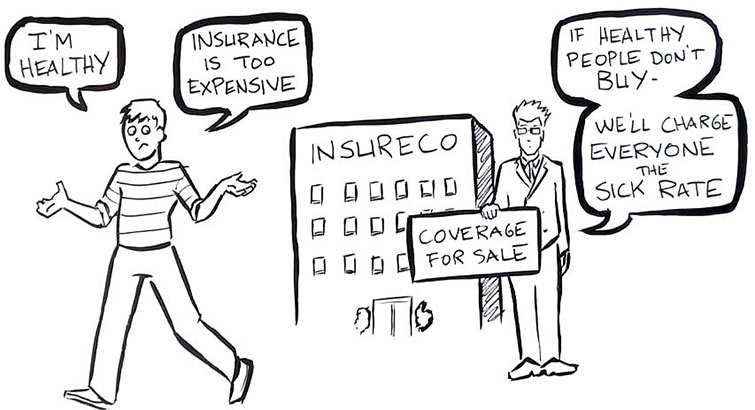
While the Affordable Care Act has achieved a second victory before the Supreme Court and produced significant coverage gains, it might also have produced a less positive outcome: in an NBER working paper, Penn LDI colleagues Mark Pauly, Adam Leive and Scott Harrington found that a large portion of non-poor (measured by income above 138% of the poverty level) who gained coverage now have a higher financial burden and lower welfare (well-being) than when they were uninsured. The authors call this extra burden a “price of responsibility” for complying with the individual mandate to purchase coverage.

To evaluate the change in financial burden and welfare, the authors compared the out-of-pocket payments made by uninsured people before the ACA with premiums and out-of-pocket payments made after gaining coverage. The authors also estimated the positive effects of health coverage, such as higher use of services and protection from catastrophic medical bills. Even so, the model found that non-poor adults who went from uninsured to insured were paying higher premiums (even with subsidies) and, surprisingly, more out-of-pocket fees. While the burden was lower for those with lower incomes, because of subsidies for premiums and co-pays, the burden across all levels of income was positive – meaning that the average non-poor adult who gained insurance under the ACA had a higher financial burden after purchasing insurance.

The authors estimated that subsidy-eligible people with incomes below 250% of the poverty threshold likely experience welfare improvements that offset the higher financial burden, depending on assumptions about risk aversion and the value of consuming more medical care. However, even under the most optimistic assumptions, close to half of the formerly uninsured (especially those with higher incomes) experience both higher financial burden and lower estimated welfare.

Stated succinctly:

“Persons with low incomes may fare better after the ACA, but those formerly uninsured at higher incomes not in poor health consistently are worse off.”

The implication here is that middle class people with low perceived health risk might prefer to remain uninsured and pay the penalty for violating the individual mandate. Reluctance among healthier and higher-income uninsureds is no surprise, but this paper appears to be the first to robustly measure the actual trade-off they would have to make in purchasing insurance.

Given that insured people use more than twice as much health care as uninsured people, it is not so hard to imagine that formerly uninsured people now have more responsibility for premiums and co-pays. But how did the authors conclude that the upsides of insurance – risk protection and actual services – are not enough to outweigh the financial burden and create “positive welfare” for newly insured people?

One reason is that most of the formerly uninsured were receiving some amount of free care (“bad debt” or “charity care”) before the individual mandate took effect. What’s changed is that people are on the hook for premiums and co-pays to receive that same care, plus other services that might not have been provided for free. The authors acknowledge that, for individuals who are low-income or at a high risk for expensive care, purchasing insurance can lead to improved welfare from additional health care services. Looking out across the entire group of uninsureds, though, the benefit of additional health care services does not appear to outweigh the increased financial burden, even with subsidies.

The surprising findings have sparked reaction from across the economic blogosphere. Matthew Martin from Separating Hyperplanes proposes one explanation: “the ACA is especially goofy in that much of the redistribution is confined to within the new individual market – even though people with employer-sponsored coverage are generally both wealthier and healthier. We have community rating within large employers and within the new individual market, but there’s no mechanism to redistribute between each of these pools.”

Writes Tyler Cowen from the blog Marginal Revolution: “I’ve read so many blog posts taking victory laps on Obamacare, but surely something is wrong when our most scientific study of the question rather effortlessly coughs up phrases such as […] ‘Average welfare for the uninsured population would be estimated to decline after the ACA if all members of that population obtained coverage.”

He continues, “the best thing to do is to improve it from within. Still, there are good reasons why it will never be so incredibly popular.”

For their part, Pauly, Leive and Harrington conclude: “It will be important to examine the level and pattern of these increased financial burdens to judge whether they are of sufficient social value to justify their imposition.”

Patient-Centered Medical Homes and Appointment Availability for New Patients

This post was originally published for the Health Policy$ense blog of the Leonard Davis Institute of Health Economics.

Enhancing access to primary care is a key component of a patient-centered medical home (PCMH). But little is known about how PCMH status affects the availability of appointments for new patients. In a new analysis of “secret shopper” data, LDI Senior Fellows Jaya Aysola, Karin Rhodes and Daniel Polsky found that PCMHs were 1.26 times more likely to offer a new appointment and 1.36 times more likely to schedule an after-hours appointment than other primary care practices, with no differences in average wait time for a new appointment.

The data were collected in 2012-2013, prior to full implementation of the Affordable Care Act. Trained field staff placed more than 11,000 phone calls to more than 7,000 primary care practices across 10 states, posing as new patients seeking a primary care appointment. Previously, findings from the study showed differences in the likelihood of scheduling an appointment by type of insurance, and the important role played by federally-qualified health centers and rural health clinics in assuring appointment availability to Medicaid patients.

While just 5% of practices in the study were PCMHs, the difference in new appointment availability may take on increased importance as the model is more widely adopted and as millions of non-elderly adults gain coverage through the ACA.

Why might PCMHs have more new patient appointment availability than other practices? It could be simply because they make a concerted effort to make access to appointments easier, as part of their overall policies on enhanced access to care. Beyond this, the data are silent. Another hypothesis is that the efficiencies created by PCMH processes may allow for greater patient panel size. There is debate, however, on whether these efficiencies will instead be applied to improving the care for existing patients. The authors note:

Some believe that PCMH will expand panel sizes and assert that global payment schemes would naturally incentivize this over fee-for-service models. Others expect that PCMH practices will keep panel sizes low and increase the intensity of services provided to existing patients, by lengthening patient visit times to improve the quality of care and minimize provider burnout.

The study did find differences in average daily census per physician between PCMH practices and non-PCMH practices. Most physicians in both PCMH and non-PCMH practices saw an average of 20-­39 patients daily, but fewer PCMH providers saw more than 40 patients daily than those in other practices. However, the study found no significant relationship between average physician daily patient census and access to new appointments, and so the question remains an open one.

The PCMH model: what we know

Patient Centered Medical Homes (PCMH) are primary care practices that are accredited by the National Committee on Quality Assurance (NCQA) according to a set of standards that focus on enhancing access and continuity of care, identifying and managing patient populations, tracking and care coordination, providing effective care management, self-care and community support, and measuring and improving performance.

The PCMH model is still in its infancy; the NCQA proposed operational standards for recognizing practices as PCMHs in 2008. Given the time needed for “practice transformation,” and the wide variation in performance on the scale that the NCQA uses to evaluate PCMH-certified providers, comprehensive and reliable evaluations have been difficult to conduct.

A 2013 systematic review found evidence of a small positive effect on patient experiences and  delivery of preventive care services, but concluded that current evidence is insufficient to determine effects on clinical and most economic outcomes.

A recent study by Aysola and colleagues found that most patients enrolled in PCMHs within the University of Pennsylvania Health System didn’t even know that they were in a PCMH. Patients uniformly lacked awareness of the PCMH concept, and the vast majority perceived no PCMH-related structural changes, regardless of the degree of practice-reported PCMH adoption.

As the PCMH model spreads and evolves, and providers are able to move past meeting a list of standards and move toward meaningful transformation – in areas such as appointment flexibility, care coordination and remote support –more useful data on PCMH performance and outcomes should emerge.

How Telemedicine Will Revolutionize Healthcare

This article was originally written for and published by Healthcare Demystified, the healthcare policy and innovation blog of Healthcare.com, where I am a weekly columnist.

Recall, for a moment, your last trip to the doctor’s office or hospital. How long did it take you to get there? How long did you have to wait before being seen? How long did you delay that visit, which may have been important but not that important, because you had trouble finding two or three hours in your busy schedule? You are not alone – that is the reality most of us experience when interacting with the healthcare system.

Telemedicine, where patients are able to telephone or video conference with their doctor or nurse practitioner, eliminates the logistics of traveling across town, waiting in a room of potentially sick people, and waiting again in a small room, all just to have a conversation that often results in a prescription or specialist referral that extends the chain of logistical headaches. What if that process could be simplified to a matter of a few clicks and no waiting?

Telemedicine takes many different forms. Some doctor’s offices and hospitals have been quick to embrace the technology for common illnesses like the flu and strep throat, psychiatric mental health appointments, and even diagnosing a stroke. The potential advantage is clear: patients can get seen more quickly, and more cheaply, which could save money for insurers and increase the number of patients doctors are able to see.

These benefits have experts predicting a huge market for telemedicine in the future: a Dublin-based research firm calculated the global market at $17.8 billion in 2014 and another predicts that the market will expand to $34 billion by 2020. With such a big opportunity up for grabs, established healthcare organizations and new startups are jockeying for position.

Doctor On Demand is the poster child for the emerging wave of telemedicine startups. The San Francisco-based company has more than $50 million in funding, dozens of physicians including general medicine and psychiatry, and has signed 200 employer clients. Adam Jackson, CEO of Doctor on Demand, says that the technology benefits both patients and doctors.

“Our patients rave about the service because they get to video conference with a board-certified MD from their home or office without having to take off work and sit in a waiting room,” he said in an email. “Doctors also love it.  It’s the first viable ‘work from home’ option for primary care physicians. Our flexible shift model and payment structure allows doctors to work flexible schedules while earning the same or more than they would in an offline setting.”

Jackson continued, “Self-insured employers are also offering it for free to their employees, which helps drive adoption and save money.” Interest from businesses is likely to grow: last month, the National Business Group on Health (NBGH) reported that 74% of employers plan to offer telemedicine coverage to employees in 2016, a sharp increase from 48% in 2015.

The business case for employers, and health insurers, is convincing. Doctor on Demand charges $40 per visit with an adult or pediatric physician, about $100 for an hour with a psychiatrist, and $70 for almost an hour with a lactation consultant. That simple pricing compares favorably with the costs, in time and money, of an in-person visit: Doctor on Demand’s $40 care is a fraction of the average cost of a primary care, urgent care or emergency department visit – $100, $150 and $700 respectively. Doctor on Demand claims that it can replace 46% of primary care visits, 35% of urgent care visits, and 12% of ER visits for an average employer.

Telemedicine appeals to employers and policy makers for another reason besides incremental cost savings and convenience for urban and suburban patients: for rural patients, telemedicine changes everything about healthcare access. Health systems are building new satellite facilities, equipped with video conferencing technology and staffed by nurse practitioners who can provide basic tests, in out-of-the-way rural communities. Now patients do not have to travel for hours to the nearest office or hospital for routine care.

This talk of cost savings and access brings up another question: who should pay for these visits? At the moment, reimbursement for telemedicine visits is uneven across the nation. Some private insurers cover telemedicine, but others do not. Medicare, the giant insurance program for older Americans, covers the visits for patients who live in “Health Professional Shortage Areas” but patients must attend the virtual appointments from medical facilities, not from their homes.

There are risks with telemedicine, though. Before, the only real option for patients was to visit the doctor or hospital “just in case” the symptoms were serious. Soon, patients might turn to on-demand video conferencing first. For patients with a heart attack or a serious infection disguised as something minor, those minutes or hours of lost time can be dangerous. There is also the risk that diagnoses will be inaccurate or incomplete if doctors cannot conduct the routine tests that would be performed during an in-person visit. In a world of telemedicine, there will be a higher burden on the patient to recognize what is and is not serious.

Some startups entering the telemedicine space are focused on particular specialties, unlike the broader Doctor on Demand. 1DocWay, based in New York, partners with psychiatric hospitals, health systems and emergency departments to facilitate mental health consults and therapy. The co-founder of 1DocWay, Samir Malik, wrote in an email: “Our focus on psychiatry had enabled us to move quickly towards integration, as many primary care physicians and medical clinics have identified mental health as their top clinical need.”

While there is certainly a need and a growing demand for telemedicine capabilities, there are issues and challenges to address. Jeremy Kahn, a Professor of Critical Care Medicine at the University of Pittsburgh School of Medicine, wrote in the New England Journal of Medicine earlier this year that past studies of telemedicine have not looked at patient-centered outcomes and that “the legal and regulatory infrastructure for telemedicine has yet to catch up with the technology, which changes on a near-daily basis.”

Kahn recommends more research that tests patient-centered outcomes and determines which contexts are best suited for telemedicine. He also states that we must “integrate telemedicine into the existing care system in ways that do not detract from the interpersonal and interprofessional relationships that we all recognize as essential to effective, patient-centered care.”

Ultimately, Kahn hopes, we will have a healthcare system that is “not just different and more modern but also better.”

Let’s Bring “Quantified Health” to Populations That Need It

This article was originally written for and published by Healthcare Demystified, the healthcare policy and innovation blog of Healthcare.com, where I am a weekly columnist.

Wearable fitness trackers and their complementary smartphone apps are taking the world by storm. There is breathless media coverage and a growing army of gadgets ranging from glorified pedometers to glucose-monitoring contact lenses. While at least one in five Americans now has a wearable device and two thirds intend to use digital tools to track some aspect of their health, and the trend shows no sign of slowing with68.1 million wearable devices estimated to be produced in 2015, the actual health benefits of these tools have not materialized for everyone.

Along those lines, The Washington Post detailed the “revolution” in a lengthy feature earlier this year, and quoted Deborah Estrin, a professor of computer science and public health at Cornell: “Getting the data is much easier than making it useful. […] It’s unclear how important and meaningful it is for the everyday person.”

Part of those underwhelming results might be due to human nature rather than because of the devices themselves. In early July, Megan Garber wrote in The Atlantic about the Ennui of the Fitbit: research indicates that a third of trackers are abandoned within six months and that more than half of people who purchase trackers will ultimately abandon them. With the case of Fitbit, which commands more than three-quarters of the market for wearable health technology in terms of revenue, just 10 million of the company’s 20 million registered users are still active.

People stick to habits and use devices that add some kind of value to their lives. For a young and relatively healthy person, Fitbits and similar gadgets might be alluring and nice to have, but can quickly lose their luster. For a few people, having an up-to-the-minute accounting of steps taken, calories consumed, weight recorded, and hours slept would inspire positive behavior change. For most others, it might become annoying and perhaps create more stress.

Mobile technology has long become mainstream, and people from all walks of life are on board, but the tech industry appears to be designing wearable health gadgets almost exclusively for the folks described as “young invincibles” or “worried well.” As such, the actual health-improving mechanism is sometimes given less attention than the development of attractive user interfaces and slick marketing campaigns.

How might we move past seeing these devices as mere entertainment value or social capital and increase adoption among people who are elderly, low-resource or have poor health status – and especially for those who check all three boxes? Making cool and informative devices that people enjoy using is undoubtedly a good thing, and such business should continue to thrive as long as the free market rewards these products, but we are not taking advantage of a major opportunity to invest in bringing wearable devices and other personal health technology to the populations that are often not included in the “target market” section of startup pitch decks. These inspired startups and their investors could make a real impact with populations that have the most “health to gain.”

How could these current leaders of innovation in healthcare spread their services to populations that are more in need of support? Rachel Davis, a senior program officer at the Center for Health Care Strategies (CHCS), explored the idea in a Health Affairs post in 2014. She cited research that found high adoption of smartphones among people making less than $30,000 per year, and CHCS focus groups suggested that lower-income populations would be receptive to increased use of digital health technology to track and manage chronic conditions.

Davis identified five principles issues that impact healthcare access for these populations: lack of consistent contact with health providers and technology, fragmented health care across settings, difficulty managing complex medication regimens, managing health needs reactively instead of proactively, and difficulty accessing transportation to and from appointments.

The exploding world of digital health startups is showing an interest in solving these problems of low-income, complex patients. The Robert Wood Johnson Foundation (RWJF) granted $500,000 to accelerator StartupHealth, which has more than 100 startup companies in its portfolio, to “make it easier for digital health entrepreneurs to develop […] products and services to meet the unique needs of [underserved] communities.”

One startup called Health ELT is building its entire value proposition on bringing “engagement, logistics and technology services” to Medicaid populations. The organization’s pilot study last year in Texas, involving 1,000 patients covered under a Medicaid managed care organization, nearly doubled engagement rates, cut emergency department admissions in half, and reduced hospital admissions by more than 35 percent. “Technology is transformative and critical to progress,” said Amanda Havard, Chief Innovations Officer at Health ELT, in an email. “We can’t keep affording that progress only to healthy and resourced populations.”

Havard has some advice for entrepreneurs who are new to healthcare and want to make an impact on elderly or low-resource populations: “Get to know the population. Get to know the system. Learn the obnoxious routes of red tape. Log time with people who know infinitely more about the industry than you do. Too often technologists roll their eyes at that. They think if they build a good enough product, then it will do what it’s meant to. This is a fallacy if you want to innovate in regulated industries. You must be willing to spend the time, energy, money, and intellectual space to learn about the industry you want to change so that the change you make is a relevant one.”

Public-private partnerships could combine private-sector ingenuity with the public-sector reach into disadvantaged communities. For one, the new Center for Medicare and Medicaid Innovation (CMMI), which wields immense influence over the finance and delivery of healthcare services to the elderly, poor and disabled, could serve as a translational intermediary between the innovative companies and the communities where need is high but access to good-quality care is low.

Apple, which is now becoming a power player in the quantified and mobile health space with its new Health app, has demonstrated a commitment to using its resources and broad user base for meaningful ends with ResearchKit, a software platform that allows medical research subjects to submit data that is collected by their iPhones. The program launched several months ago, and since then more than 75,000 subjects have enrolled in mobile health studies related to asthma, Parkinson’s Disease, diabetes, breast cancer, and heart disease. In some cases, a smartphone enables a level of precision and convenience that patient testing within a facility cannot offer. Consider one diagnostic used in the Parkinson’s Study and described by the lead researcher, Dr. Ray Dorsey, of the University of Rochester Medical Center: “One test […] measures the speed at which participants tap their fingers in a particular sequence on the iPhone’s touchscreen. [That’s] more objective than a process still used in clinics, where doctors watch patients tap their fingers and assign them a numerical score.”

The ResearchKit concept is powerful because it enables patients to contribute to medical research in a more convenient way. The barriers to participation in research studies – inability to take time off work or travel long distances – are significantly diminished. For lower-income and sicker people, who experience these barriers most often, such technology could facilitate more representation in important medical research studies.

Healthcare technology, and the mobile and wearable health space in particular, is receiving an enormous amount of attention and funding. The excitement is warranted – our ability to collect and analyze data is advancing alongside our understanding of biomedical diseases, treatments, and the social and economic factors that influence them. While the free market should reward those who invent the next cool thing, we also should not discount the potential of this technology to make a different in places where it is needed most.

More People Think They Are Covered by Health Insurance – But Is It Good Enough?

This article was originally written for and published by by Healthcare Demystified, the healthcare policy and innovation blog of Healthcare.com, where I am a weekly columnist.

Since 2008, the government’s healthcare focus has been to help uninsured people find coverage. However, a new problem has emerged with devastating consequences for everyday Americans. More than 30 million people in this country are underinsured, meaning that their out-of-pocket costs exceed 10 percent of their income. That means that almost one quarter of the non-elderly, insured population is in a situation where their medical bills are a financial burden – the kind of burden that insurance is supposed to take care of in the first place.

Although the level of underinsurance has risen since 2003, the Affordable Care Act (ACA)’s broad efforts to reduce uninsurance might actually make this underinsurance problem worse: the new plans sold on the marketplaces often have lower up-front premiums in exchange for higher deductibles (out-of-pocket costs) when patients seek care. The lower the metal level of the plan (i.e. gold, silver, bronze) the higher the deductible. Patients who select silver and bronze plans in order to have affordable premiums are often unable to afford the higher deductibles that come up down the road. Most of the time, patients do not realize that they are making this trade-off until the medical bills arrive after an expensive hospital stay or specialist visit.

People are more or less likely to be underinsured based on the kind of insurance plan they have. It would be natural to think that most underinsured people have Medicare or Medicaid plans, but a survey from The Commonwealth Fund found that 59 percent of people who are underinsured have employer-sponsored coverage. Put a different way, a full 20 percent of people who have insurance through their jobs are underinsured. This fact goes against the conventional wisdom that people who have insurance through their employer have adequate coverage.

The level of underinsurance among people who have employer-sponsored insurance has doubled since 2003, but those who purchase individual insurance coverage have become even worse off. Individual plans in the past were all purchased directly from an insurance company or broker, but now the plans are often found and purchased through an marketplace under the ACA. This group has seen its rate of underinsurance more than double since 2003, from 17 percent in 2003 up to 37 percent in 2014. While this group is small, the need for more adequate coverage is great.

What are the consequences of lower quality coverage? Recently a Gallup poll showed that one in three people has “delayed medical treatment for themselves or a family member due to concerns about cost” – a level not seen in 14 years. The Commonwealth Fund has found that, among these 30 million underinsured people, 26 percent skipped a test or treatment and 24 percent did not fill a prescription due to the cost. Making matters worse, people are going into medical debt: half of underinsured beneficiaries report debt of $4,000 or more.

The health and economic costs of underinsurance are even greater among those with chronic conditions. The Commonwealth Fund report found a 30 percent rate of underinsurance among people with chronic conditions – compared with just a 16 percent rate of underinsurance among healthier people. 24 percent of these underinsured, chronically ill patients report avoiding to fill or take a prescription medication – compared to just 7 percent of well-insured adults who also had chronic illnesses. These gaps between underinsured and well-insured people are significant and have persisted, even widened, over the last decade.

It is important to keep in mind that we have been talking about individuals with year-round insurance. The problems related to financial access and the cost of care are magnified for those who are uninsured. And while the number of uninsured is dropping under the Affordable Care Act, the newly insured people are not guaranteed full protection.

Consider the story of Karen, a 55-year-old single woman with two grown children. She lost her job at an advertising firm during the recession and had been uninsured for five years – until the second window of open enrollment in the fall of 2014. She has been earning enough income through freelance work that she does not qualify for Medicaid, but she is close enough to the federal poverty level to receive a subsidy to purchase coverage on her state’s new insurance marketplace. Priding herself on her deal-finding skills, she chooses a plan with a low monthly premium that still seems to provide decent coverage.

Three months after signing up for coverage, Karen visits her primary care physician and learns that she need to switch from the current diabetes medication she is taking to a more powerful, more expensive version to manage her blood glucose level. Undeterred by the extra expense because of her new insurance, she visits the pharmacy to pick up the prescription. She discovers that her plan only covers half of the cost and that, because of her deductible, she will have to pay more than one hundred dollars per month. Now she has a difficult choice between starting the new prescription – and therefore not being able to take as many trips across the country to visit her grown children – or sticking with her current, less effective medication.

While Karen’s story is made up, it is illustrative of the small but significant economic, social and health impact that underinsurance can have on the lives of everyday people.

The issue is starting to attract more attention, especially from Democrats, heading into the 2016 presidential election season. Rep. Jim McDermott (D-Wash) said: “We’ve got some 17 million more people covered … but they can’t access the care they seem to be entitled to. It costs too much to use the care. That’s the deceptive part about it.”

Along the same lines, the New York TimesAaron E. Carroll wrote: “In the quest for universal coverage, it’s important that we not lose sight of ‘coverage’ in order to achieve ‘universal.’ The point of improving access is, after all, to make sure that people can get, and afford, care when they need it.”

The consequences of underinsurance have made it more important to ensure that all consumers understand their insurance plans, from knowing the difference between monthly premiums and out-of-pocket deductibles to knowing their options when faced with a large medical bill. State and federal marketplaces, as well as insurance companies, can and should put more effort into helping people select the right plan for their health needs and financial resources. That is a goal that will benefit all stakeholders – providers, payers and patients – in our healthcare system.